Thaisan Tonthat | Writing
Principles for Building Great Products with Vlad Tenev
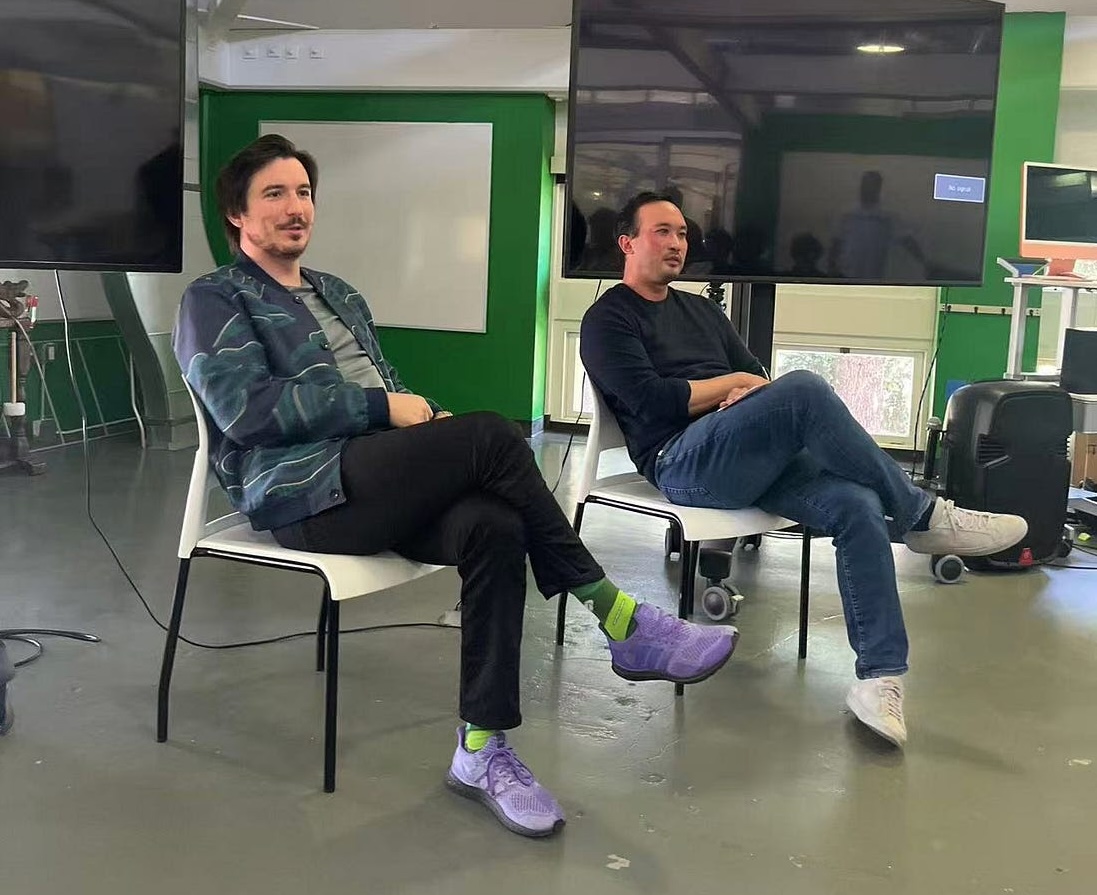
Vlad Tenev, the cofounder and CEO of Robinhood, was kind enough to join us in one of the courses I teach at Stanford University. He chatted with our student founders about four principles for building great products. Here’s what we learned.
The 4 ideas are Vlad’s; commentary is mine.
The Four Principles
- Be different
- The Transitive Property
- Deliver on your promises
- Speed to signal
1. Be Different
Your product must be sufficiently differentiated for people to care. Launching a product that is marginally different from one that exists will get nobody interested.
In 2013, the idea of commission-free trades was unheard of. Investors were used to paying $10, $20 or even more to execute trades. How could they suddenly be free? Upon launching their website, a keen user’s post quickly hit the top of Hacker News and their waitlist swelled to hundreds of thousands within days.
Robinhood more recently launched their Gold Credit Card. Their pitch: “Industry leading 3% cash back”. And it’s made of gold! Well, some of them at least.
The reason it’s common founder advice that the product needs to be 10x better is because a 20% improvement is not enough to overcome switching costs, and more importantly, for a customer to care at all — and to point #2, talk about it with others.
Launch a new category, be an order of magnitude better, or be radically different than what exists in the market. Find a way to be remarkable.
2. The Transitive Property
Vlad was a math major, so he goes to the transitive property as a mental model. Remember from middle school: A = B, B = C, therefore A = C.
Your product must be so easily explainable that if you told a friend about it, and they told another friend, and they told another friend, and that final person explained it back to you, you’d hear the same message you started with.
Robinhood’s original pitch was easy to grok and repeat: “Free trades.” No explanation necessary.
Have you ever had to explain a new company or product idea to someone in a cocktail party context? It can be hard. Now try it for some companies you know: Square, Dropbox, Uber, Kalshi. I bet you find that easier. It’s because they’ve refined their offering and story to be something you can say in a sentence. This takes time and effort and doesn’t start that way.
Note that for big, enduring companies, their product lines have expanded and their pitch may not be so simple to do this exercise on. But when you’re Apple or Nike or Visa, everyone already knows you. You can bet that when they were still upstarts, their pitch was simple.
3. Deliver on Your Promises
Fulfilling the promises you made to your users is paramount. If you promised your solution was the fastest, you better deliver, and back it up with metrics. If you promised to solve a problem with AI, it better not hallucinate 20% of the time.
The promises Robinhood made with its products are simple — to understand, not implement — and fulfilled. Trades are in fact commission-free, and the Gold Card does give 3% back as advertised.
Apps like Linear and Superhuman promise to be the fastest way to process your tasks, and they measure their latency to make sure they are fulfilling their promises. Competitors either don’t make this an important differentiator, point 1, or they don’t prioritize making this true for users.
4. Speed to Signal
You can get a lot wrong, but if you get signal quickly and are able to adapt, you can get to “right”.
You’ve heard this advice in some format before, but it is so important it bears repeating. A startup’s only advantage is speed, and a scaled company that prioritizes speed to signal is one that can test more ideas, correct quicker, and ship more products.