Thaisan Tonthat | Writing
First Versions
People forget how first versions of a company look radically different from what the scaled company looks like today. Specifically, I am talking about the offer. A big part of the early journey is figuring out exactly what you do and how to tell the story. The journey of finding product-market fit is that of trying to define a target user, pain point, and feature, and packaging it as something you can communicate clearly and succinctly. Identifying/building the right thing goes hand-in-hand with getting people to know about it and care. A simplistic way to think about this might be "Product" vs "Marketing" but they're actually just two sides to the same coin.
Some of reasons for the first version being different from today are obvious: v1 was kind of shitty because the founders lacked the resources to ship a highly polished version ("If you're not a little embarrassed, you shipped too late!"), or it was hacked together as a quick experiment. Perhaps the product was focused on a narrower part of the market because the founders wisely understood they could not boil the ocean and instead had to find a beachhead to start at.
However, a common mistake I see is not having clarity in messaging. First-time founders look at the polished version and try to emulate what they see in category leaders, not considering how much evolution went into getting there. They adopt vague, aspirational language instead of simple value props. In order to get your first customers, they must first understand what you do.
Here are the four things that matter for v1:- Crystal clear value prop
- Painkiller vs Vitamin
- Differentiation is important
- You have to be specific at first. You can be more broad later
1. You have 8 seconds to make someone care
When you are first launching, nobody knows about you and nobody cares. You have no distribution, no mindshare, no traction, nothing. You have mere moments of someone's attention, whether that's on your pitch deck, website, or in conversation. If you can't explain what your company does in a sentence or two, you're dead.
Your value prop must be clear, specific, targeted at a significant pain point, and differentiated. At this phase you are fighting against someone skimming your website for 8 seconds and bouncing because it didn’t pique their attention.
There is a tendency for first-time founders to want to “show your work”. Look at all the features we have, let me describe it in a wall of text. Guess what? People don’t give a shit about your work, they care about themselves. Can you make their life better, and quickly?
Take a look at Coinbase. In 2011, one Bitcoin was worth $1 and it was still a fringe cryptolibertarian idea. Buying Bitcoin was surprisingly difficult: you had to send bank wires or checks to strangers, do peer to peer exchange through forums, or physically meet someone in a park and pay cash for it. It wasn't commonly accepted as payment or even known by the general public.
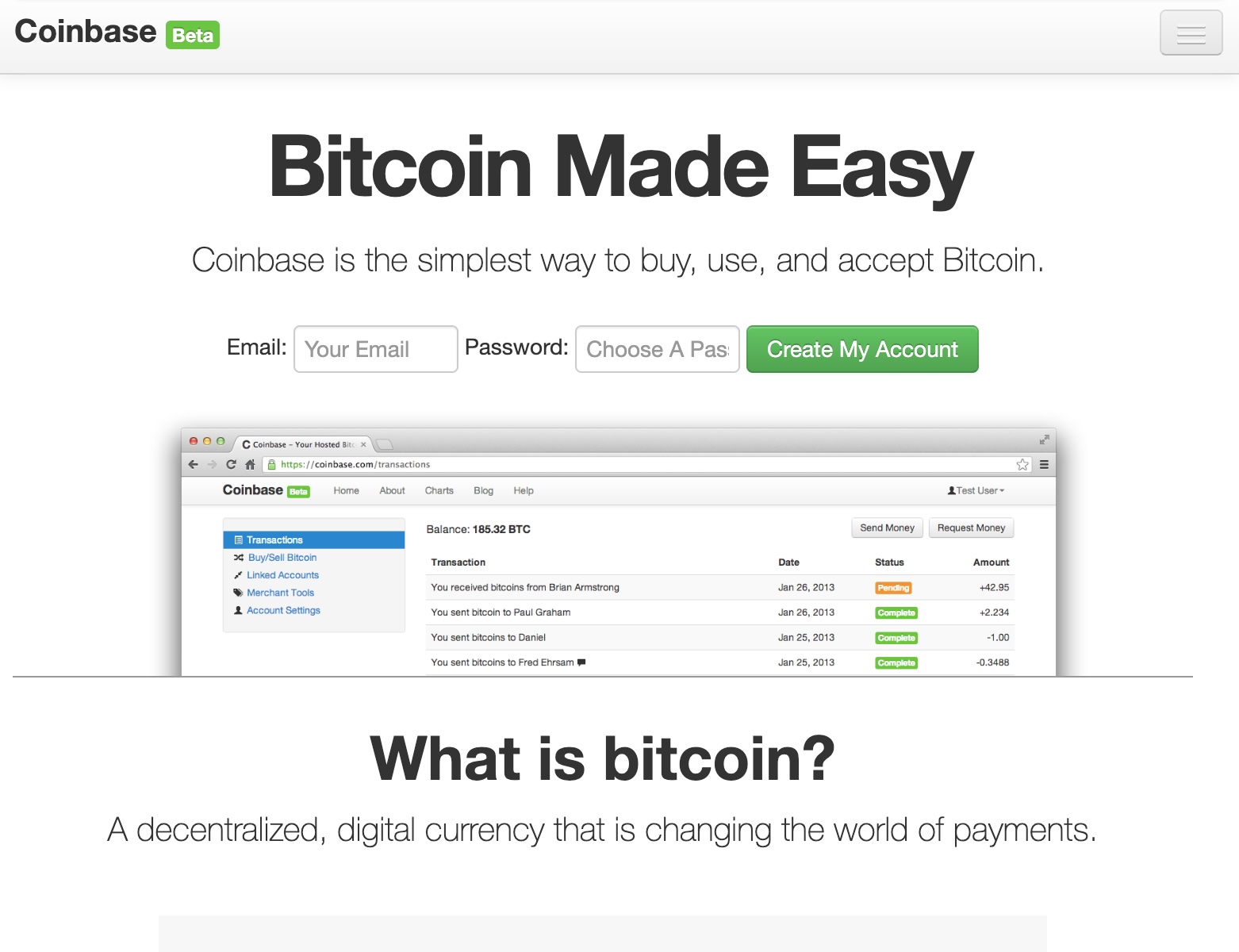
Coinbase's original website reads: "Bitcoin Made Easy / Coinbase is the simplest way to buy, use, and accept Bitcoin".Crystal clear. Simple. Direct. Using Bitcoin is hard. Coinbase makes it easy.
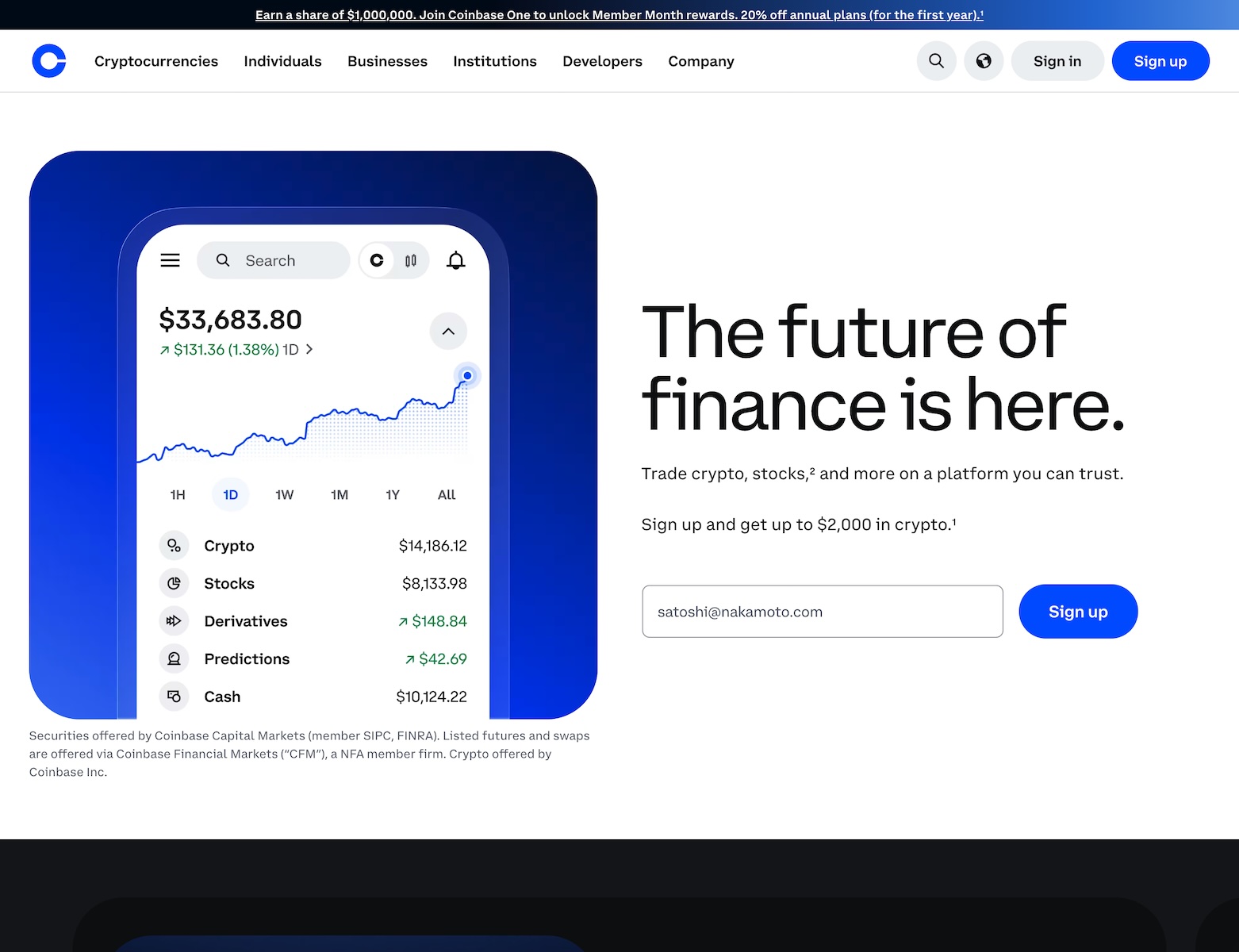
Today, the website's main text is "The future of finance is here". Broad and generic, it works for Coinbase because today it is a recognized brand. But if this were an upstart company, it'd be hard to understand exactly what they do and why I should care.
2. Is it a need or a want?
Look at this early Rolex ad. Heat proof! Water proof! Perspiration proof! Defies the elements!
For those unfamiliar with the history of the brand, Rolex started off as a tool watch and was notable for inventing the first waterproof case.
Today, Rolex is considered a luxury brand and you are more likely to find one on the wrist of a financier than a mountain climber or ocean swimmer.
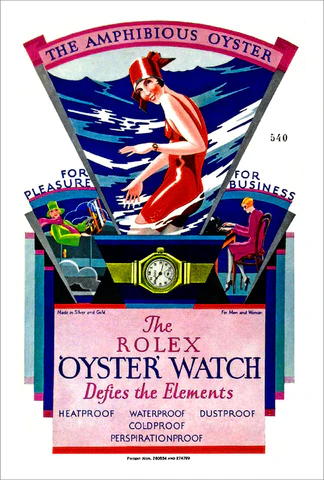

So why is the early ad so focused on functionality? In comparison, the modern ad simply shows the familiar crown logo overlaid on a celebrity photo. There's not even a picture of a watch. The reason stems from the fact that most new products start as a need, not a want (i.e. painkiller not vitamin). I encourage founders to experiment in finding a niche with an acute pain point, as it will drive the most adoption. It's better to have 100 people love you than 10,000 people feeling lukewarm about you.
How can Rolex get away with the 2nd ad? The word Rolex doesn't even appear in the image. Well, the company was founded in 1905 and had 121 years to expand its product line and build its brand equity (by the way, Hermes started as a saddle maker and Louis Vuitton as a luggage outfitter). Its audience already recognizes it.
Ironically, in this case the painkiller turned into a vitamin. Mechanical watches are less accurate in telling time than iPhones and modern quartz watches. The only reason to wear a Rolex today is for what it signifies.
3. Don't be boring
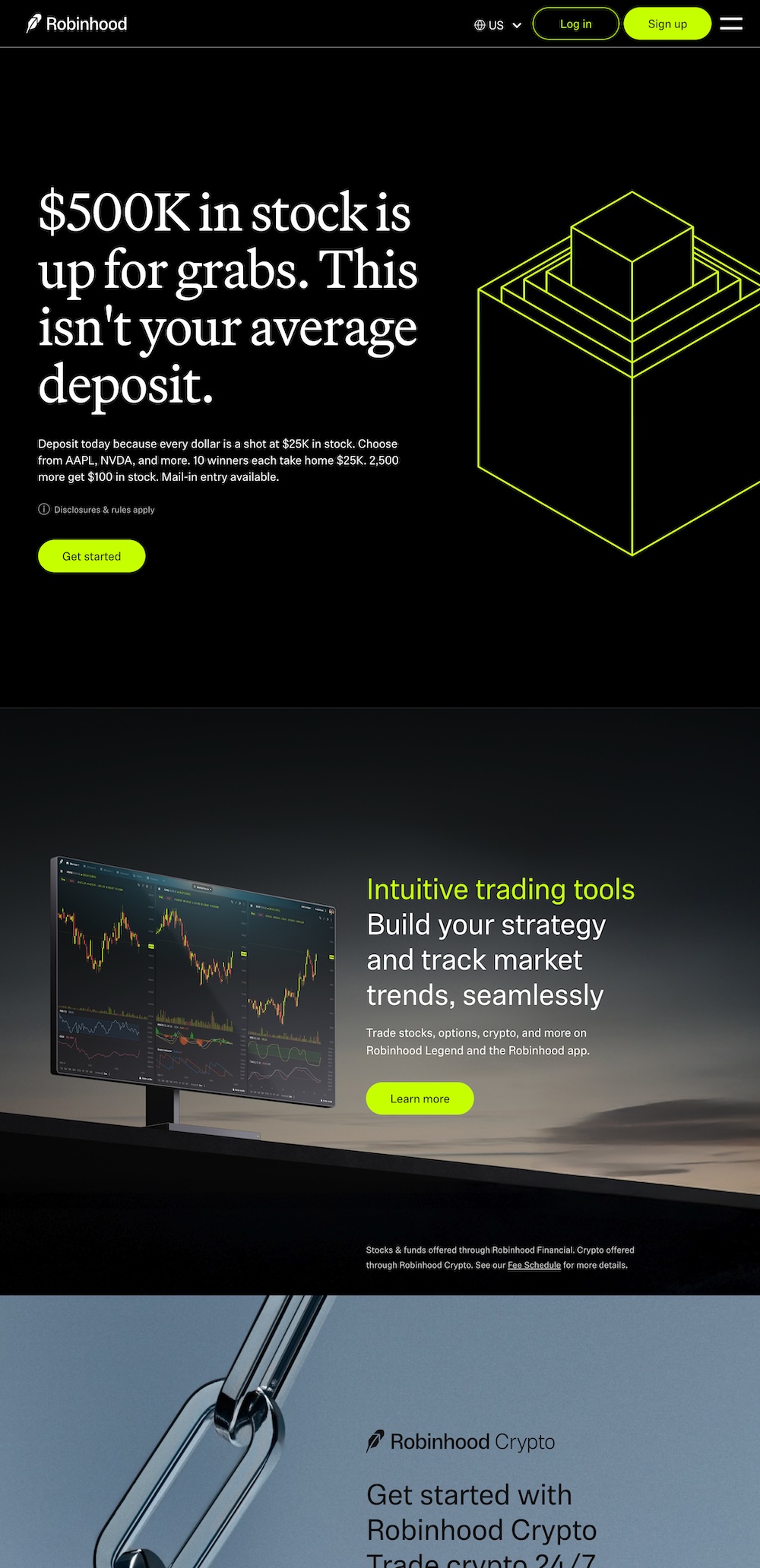
Robinhood launched in 2014 with a clean, modern, and enjoyable stock trading app. More importantly, they brought something to market that had never existed before.
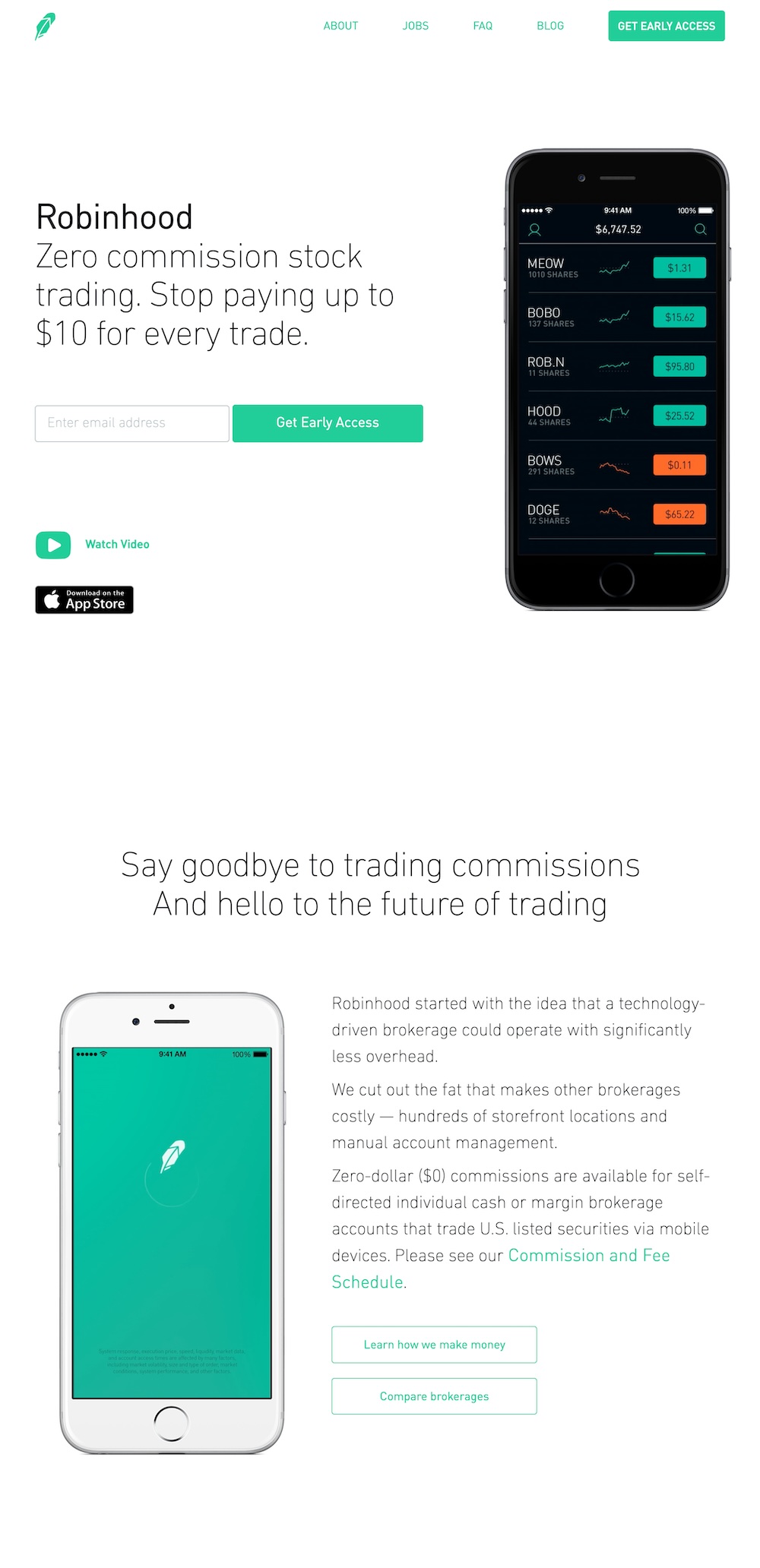
Take a look at the pre-launch website on the left. "Zero commision stock trading. Stop paying up to $10 for every trade."
The hero text is crystal clear about its value prop: "Free trades".
No wonder that after this was posted on Hacker News, the waitlist swelled to the millions. This was something completely new that solved a very clear pain point for users.
Despite launching a product in a space already crowded with many large competitors, Robinhood was able to garner the attention of new customers by being radically different.
Internally, they may have had the long term mission to democratize access to the markets, or to be the all-in-one financial platform for everyone. Those statements might make sense to an investor, but they make no sense to a customer.
4. As you grow, you earn the right to do more
Before Nike was Nike, Phil Knight and Bill Bowerman founded Blue Ribbon Sports in 1964 to distribute Japanese running shoes in the US. In 1971, they started making their own shoes and the rest is history.
Today, Nike's mission statement is broad:
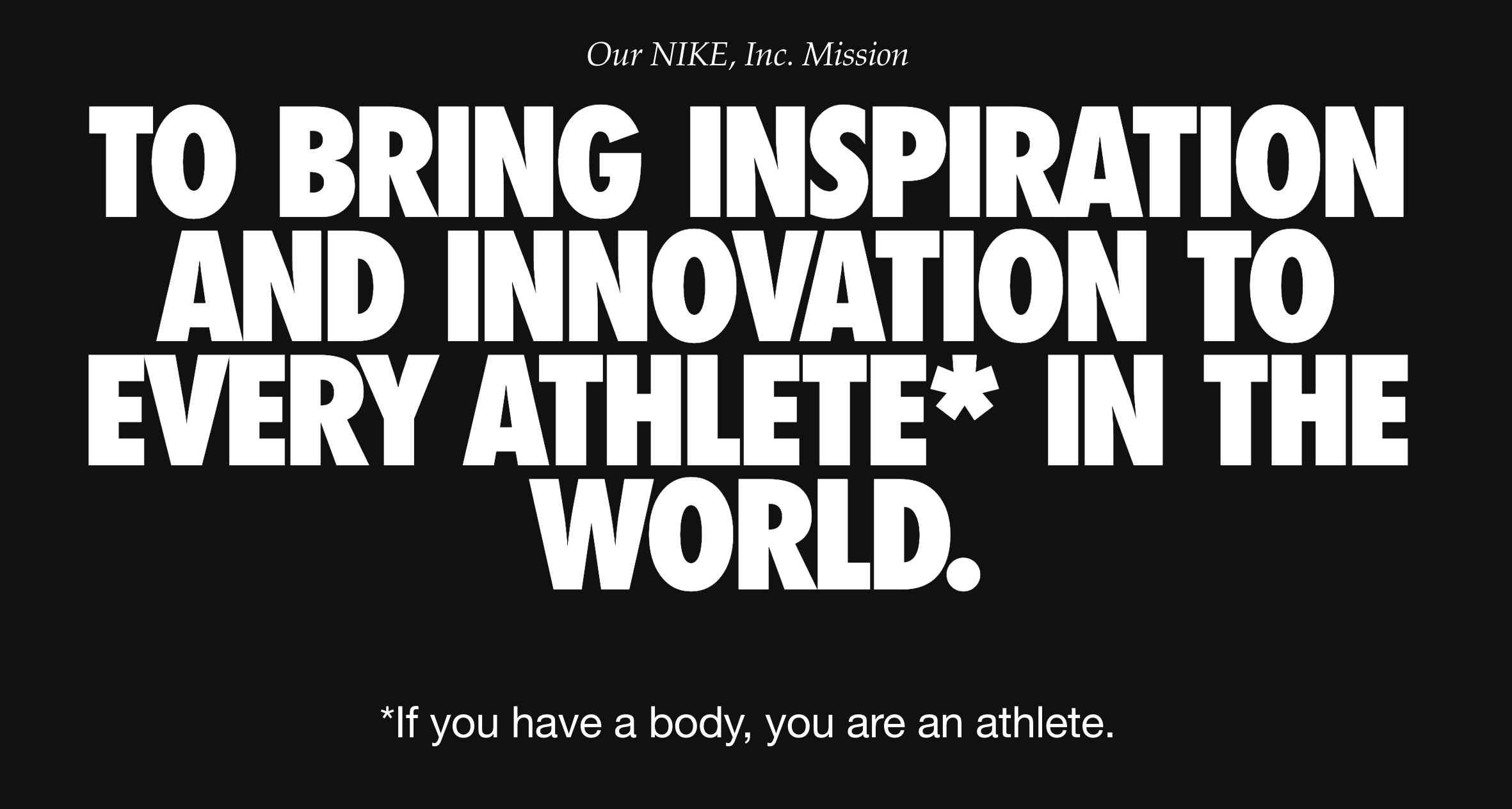 But in the early days, it was specific. It could have been something like "bring excellent Japanese running shoes to the US" or "make the best shoes for runners".
Note: Internal-facing mission statements can be more abstract and lofty compared to customer-facing messaging, but the point is, start specific.
Patagonia started off selling climbing gear, Under Armour started selling compression shorts.
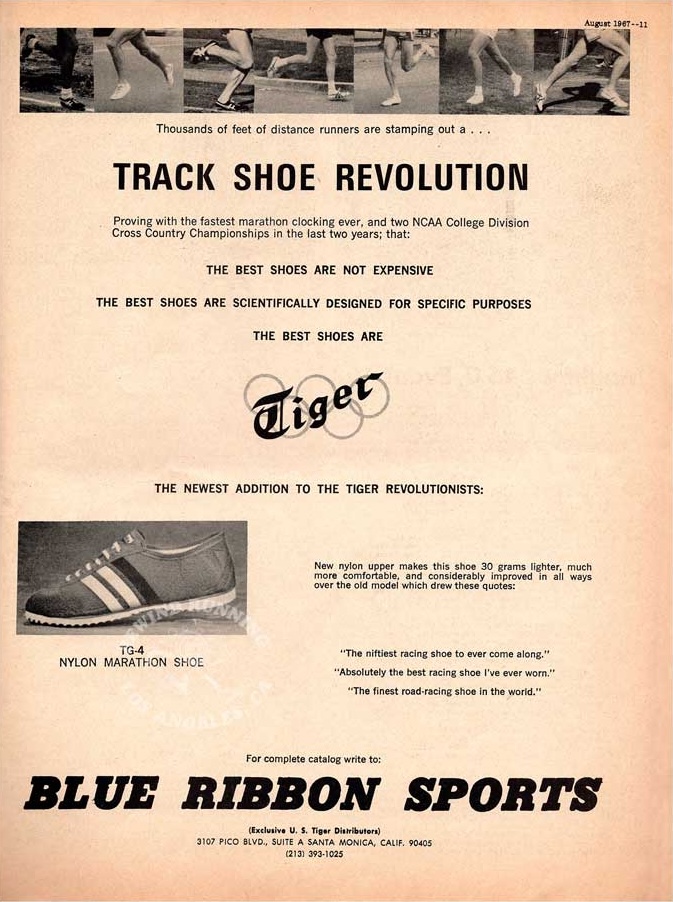
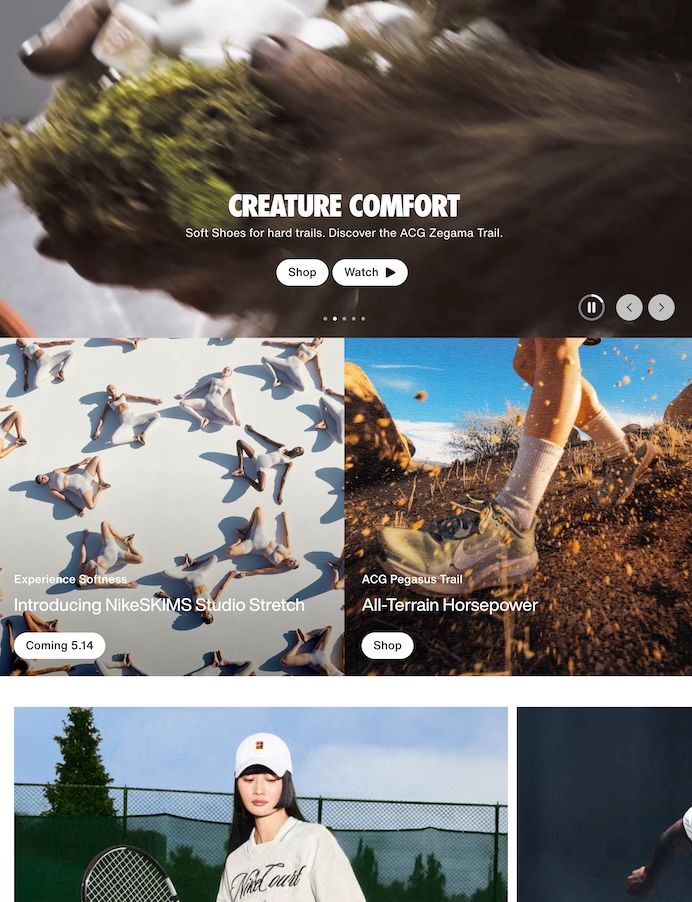
How to do this in practice
Telling your v1 story succinctly is easier said than done and it usually takes quite a bit of trial and error. Err on the side of being more specific. Adapt your messaging for different mediums. The messaging will need to be different, but there should be a throughline. What do your website copy look like? What about a 2 minute pitch? A business card, an outreach email, a pitch deck. These are all mediums for you to practice telling a consistent message of "What do we do" and "Why should you care". Test with lots of people until you are reliably seeing lightbulbs go off with potential customers.